
Salivary Gland Cancer Treatment in Gujarat: Symptoms, Diagnosis, Advanced Treatment & Expert Care
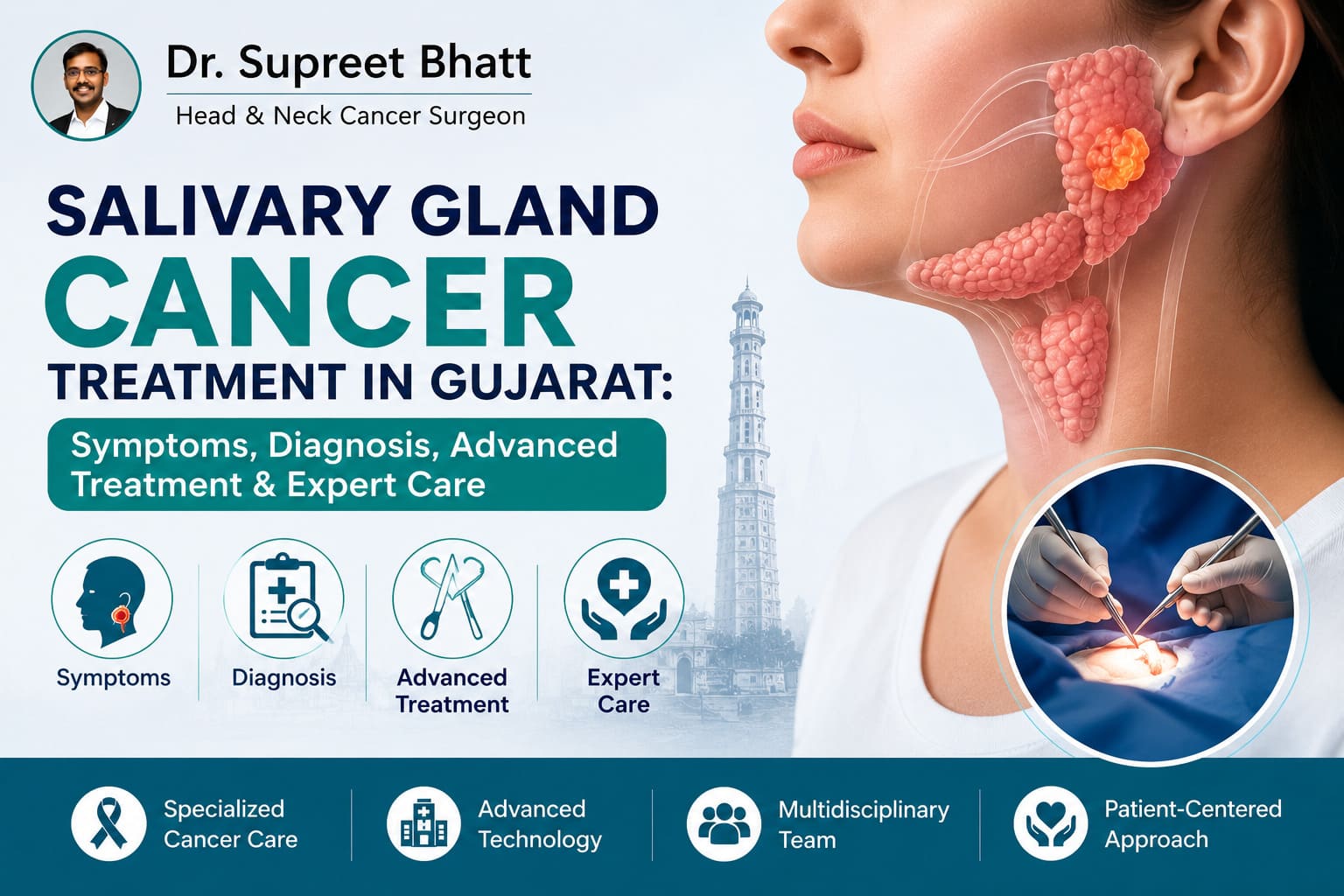
Salivary gland cancer is an extremely rare, dangerous kind of cancer. It's hard to diagnose early because its symptoms are often confused with those of benign illnesses. Many patients don't get treatment until the cancer is more advanced.
If you're looking for salivary gland cancer treatment in Gujarat, knowing the symptoms and the ways the cancer can be diagnosed, along with the treatment options available, can help you take control of your health.
Understanding Salivary Gland Cancer
Salivary glands are responsible for the production of saliva which is essential for the health of your mouth. There are three major glands.
- Near the ears are the Parotid glands.
- Beneath the jaw are the submandibular glands.
- Under the tongue are the sublingual glands.
While salivary gland cancer is rare, it is still possible to have cancer in any of these glands.
What Are Salivary Gland Tumors?
Tumors are growths that can occur and be either cancerous or non-cancerous. While many tumors of the salivary gland can be non-cancerous, they can still be aggressive and affect other tissues and even lymph nodes if they aren't treated.
Symptoms of Salivary Gland Cancer
The likelihood of successfully combating any cancer is higher the earlier the diagnosis is made. Salivary gland cancer symptoms can include any of the following:
A Lump or Swelling
The appearance of painless lumps or swellings on the jaw, neck, mouth, or near the ear are the most common early signs of salivary gland cancer.
Facial Weakness or Numbness
Weakness and difficulty with the muscles of the face may result from salivary gland cancer and associated tumors which affect nearby nerves. This may accompany numbness in part of the face.
Difficulty Swallowing
Some salivary gland cancer patients experience difficulty in the swallowing of food. Others experience the feeling of an obstruction in the throat which may impede the swallowing of food.
Persistent Pain
If the pain caused by tumors in the mouth, neck, or ear persists, this may be an indicator of salivary gland cancer.
Changes in Speech
Advanced tumors of salivary gland cancer which are large and obstruct the mouth may affect a person’s ability to speak.
These symptoms prompt a visit to a head and neck cancer surgeon, especially if they have persisted for several weeks.
Risk Factors and Causes of Salivary Gland Cancer
It may not be possible to identify the cause of salivary cancer, but the following may increase the risk of contracting salivary gland cancer:
- The increasing age of a person
- Exposure to radiation on the head and neck in the past
- Exposure to certain toxic substances in the course of duty
- Genetic mutations of gland cells
- History of benign salivary gland tumors
It has been observed that in many cases of salivary gland cancer, none of the above risk factors are present.
Diagnosis of Salivary Gland Cancer
In Salivary Gland Cancer Treatment in Gujarat, diagnosis is important and the first step in the process.
Clinical Examination
The specialist will examine the following:
- The size and location of the tumor or lump
- The function of the facial nerve
- The neck lymph nodes
- The oral cavity and throat
Imaging Tests
Imaging helps assess the growth and spread of tumors.
Commonly used tests are:
- Ultrasound
- CT Scan
- MRI Scan
- PET-CT Scan (used selectively)
- Fine Needle Aspiration Cytology (FNAC)
FNAC uses a fine needle to remove cells from a mass for testing.
A Biopsy
Sometimes a tissue biopsy is necessary to confirm a diagnosis of cancer and to identify the type of cancer.
Gujarat’s Salivary Gland Cancer Treatment: What’s on Offer
Cancer facilities in Gujarat have developed multiple treatment modalities, and personalize cancer treatment according to each case.
Salivary Gland Cancer Treatment in Gujarat: Available Options
Reoccurrence of the cancer should be prevented Surgical options are
- Parotidectomy
- Submandibular Gland Surgery
- Neck Dissection
Radiation Therapy
Radiation therapy may be necessary following surgery
For high-grade tumors
- After surgery
- For high-grade tumors
- When complete removal is difficult
- To reduce recurrence risk
Radiation therapy may be used in cancer that have not spread extensively.
Treatments That Are Innovative and Advanced
For selective cases that are advanced and recurrent, doctors may recommend:
- Targeted therapy
- Immunotherapy
- Combination treatment approaches
These modalities may be explained and offered to patients, depending on tumor characteristics and staging.
Why Early Treatment Matters
A consequence of the competitive field of health care is the limited recognition of the consequences of delayed diagnosis. Early treatment is often advantageous to the patient because of:
- Simplicity of surgery
- Less invasive surgery
- Less complex treatment
- Improved quality of life
- Improved prognosis
Patients often ignore an asymptomatic small lump. More commonly than not, delayed evaluation by a specialist often results in a treatable disease.
The Right Specialist for Salivary Gland Cancer
Most salivary gland tumors are in close proximity to the facial nerve and treatment of these tumors requires a high degree of specialization and skill. When considering a specialist, look for someone who:
- Surveys head and neck cancer
- Treats in a multidisciplinary environment
- Utilizes advanced cancer diagnostics
- Balances personalized treatment with care deficits
- Provides rehabilitation post treatment
Patients who want Salivary Gland Cancer Treatment in Gujarat may benefit from a specialist head and neck cancer surgeon who diagnoses and treats advanced salivary gland tumors on a regular basis.
Expert Care with Dr. Supreet Bhatt
Dr. Supreet Bhatt is a skilled head and neck cancer surgeon who evaluates and treats salivary gland tumors. His goals are to create plans and treatment strategies that are evidence-based and focus on the patient.
Recovery Post Treatment of Salivary Gland Cancer
1. Recovery from treatment is dependent on:
- Time taken for surgery
- Stage of the cancer
- Health of the patient
- Type of treatment
- Time Duration of surgery
2. Patients may need:
- Frequent imaging and in-person visits
- Speech therapy and exercises to swallow
- Nutritional therapy and counseling
Most patients are able to return to their normal routine with the help of rehab and treatment as directed by their physician.
What Makes Cancer Care in Gujarat Stronger Today?
A benefit patients have when seeking Salivary Gland Cancer Treatment in Gujarat includes access to the:
- Head and neck oncology
- Finer imaging systems
- Tumor boards
- Novel radiation-based therapies
- Tailored treatments
The regional advancements have positively impacted treatment and associated outcomes.
Frequently Asked Questions
What is salivary gland cancer? Salivary gland cancer is a cancer of the glands, which produces saliva and are located in the mouth, jaw, and neck. Salivary gland cancer is rare.
What are the early signs of salivary gland cancer? Ear or jaw lumps, numbness or weakness of the face, and trouble with swallowing are some of the early signs.
How is Salivary Gland Cancer Treatment in Gujarat done? Stage of the cancer is a determining factor in the therapies selected, which can include a combination of surgery and radiation.
Are all salivary gland tumors cancerous? No, salivary gland tumors are many times benign but must be assessed to determine.
Can cancer of the salivary glands be totally treated? If it is recognized early enough, safe treatment is possible in many situations.
Who is the appropriate health professional for treating cancer of the salivary glands? The best available medical professional is a surgeon of head and neck cancer who specializes in cancer of the salivary glands and their treatment.
Is it necessary to always perform surgery in cancer of the salivary glands? In cancer of the salivary glands, surgery is the primary treatment in a large number of cases, and in addition to surgery, some patients require radiation or other therapies.
Taking the Next Step Towards Better Health
A lump on the jaw, near the ear, or in the neck should never be ignored. A patient’s cancer outcome can be improved with earlier and better treatment of salivary gland cancer.
Do not hesitate to seek the advice of an expert when considering the best treatment options for care. Dr. Supreet Bhatt provides expert assessment and advanced treatment options for patients seeking trusted care and guidance throughout their cancer journey.

Head and Neck Cancer Surgeon, Senior Consulatent Zydus Cancer Center, Skull base cancer specialist
