
Salivary Gland Cancer Treatment in Ahmedabad
Salivary Gland Cancer Treatment in Ahmedabad
Salivary glands play a crucial role by maintaining optimum balance of salivary secretions in our mouth, which has got a very vital role for oropharyngeal protection and a healthy digestive system. There are three sets of major salivary glands and multiple minor salivary glands.
About
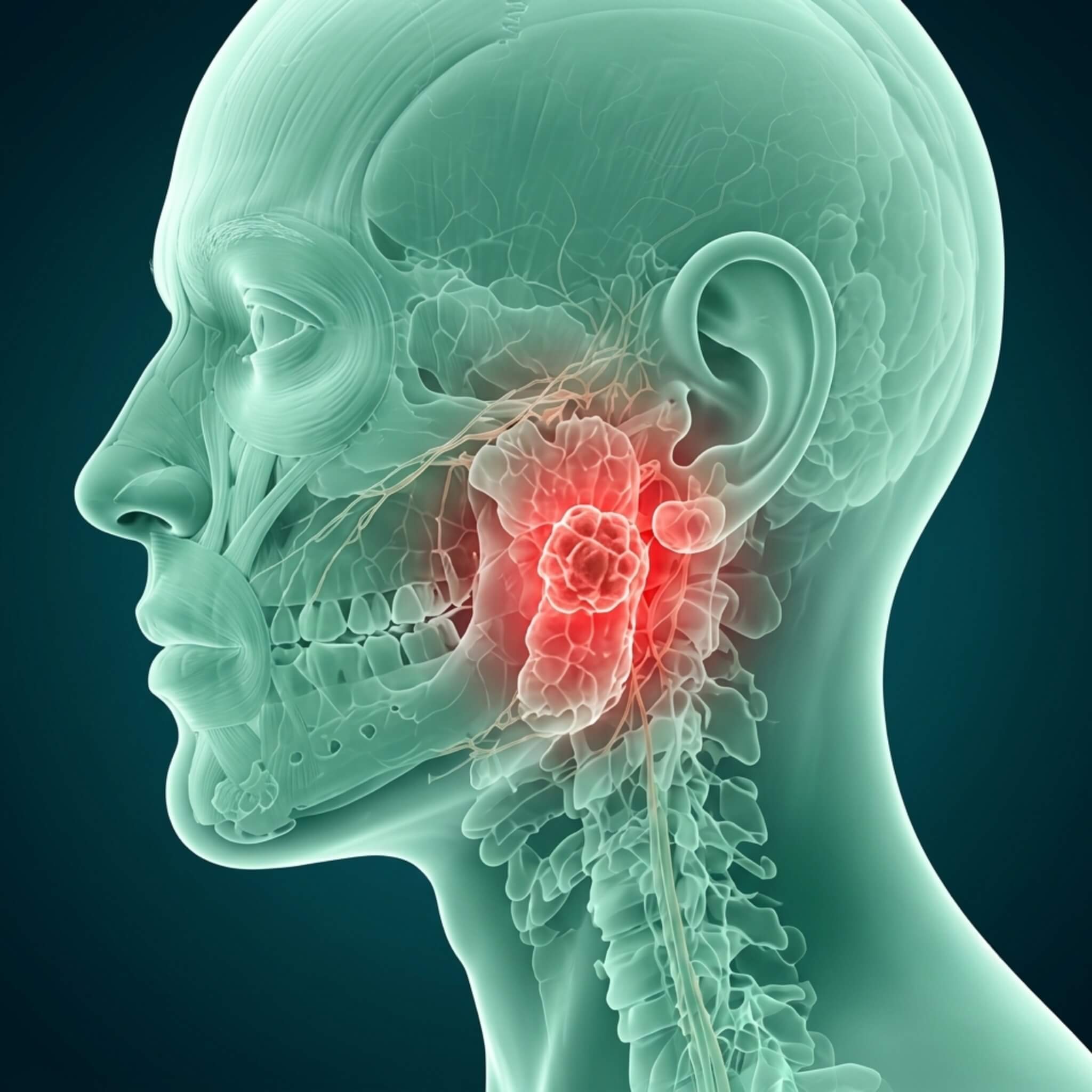
Salivary glands play a crucial role by maintaining optimum balance of salivary secretions in our mouth, which has got a very vital role for oropharyngeal protection and a healthy digestive system. There are three sets of major salivary glands and multiple minor salivary glands. Which type of salivary gland tumor you have depends on the type of the gland and the types of the cells involved in the gland.
- Major salivary glands
- Parotid gland
- Submandibular gland
- Sublingual gland
- Minor salivary glands
Most common malignant salivary tumors:
Mucoepidermoid Carcinoma
Mucoepidermoid carcinoma is the most common type of salivary gland cancer. More than 30 percent of salivary gland cancers are thought to be this type. Cancers that develop here often form tiny mucous-filled cysts. Most mucoepidermoid carcinomas develop in the parotid glands. They can also develop in the submandibular glands as well as the minor salivary glands.
Adenoid Cystic Carcinoma
Adenoid cystic carcinoma is a slow-growing but aggressive cancer. It is more likely to come back after initial treatment than other salivary gland cancers. It is the most common type of cancer to develop in the minor salivary glands. It often grows along the nerves, which can cause pain and facial paralysis.
Acinic Cell Carcinoma (Acinic Cell Adenocarcinoma)
This cancer develops in the acinar cells, which produce saliva. Acinic cell carcinomas are slow growing. They are more common in women than men. Most develop in the parotid gland.
Adenocarcinoma, NOS (Not Otherwise Specified)
Adenocarcinoma, NOS, refers to cancer that does not fit an exact classification. It can occur in the major salivary glands (usually the parotid glands) or in the minor salivary glands. A painless lump is the most common symptom.
Most common benign salivary tumors:
Pleomorphic Adenoma
Pleomorphic adenomas are the most common type of salivary gland tumor. "Adenoma" is another word for a noncancerous lump. "Pleomorphic" refers to variations in the size and shape of individual cells or groups of cells composing the tumor.
Warthin's Tumor
Warthin's tumor is a benign lump that almost exclusively appears in the parotid glands. These tumors are more common in men than women. They have been linked to a history of smoking as well as radiation exposure.
Other Types of Salivary Gland Tumors
- Adenosquamous carcinoma
- Carcinoma ex pleomorphic adenoma
- Carcinosarcoma
- Clear cell carcinoma
- Epithelial-myoepithelial carcinoma
- Lymphoepithelial carcinoma
- Lymphomas
- Oncocytic carcinoma
- Salivary duct carcinoma
- Squamous cell carcinoma
Risk Factors
Because salivary gland cancer is a rare cancer, experts have not been able to draw very many conclusions about the possible causes.
- History of radiation exposure
- Gender: Cancer in the salivary glands is more common in men than women.
- Age: Most people are in their 50s or 60s when diagnosed with salivary gland cancer.
- Tobacco: Tobacco includes both smoking and smokeless tobacco (snuff and chewing tobacco).
- Alcohol: There may also be a connection between drinking alcohol and salivary gland cancer, but the data is not conclusive.
Exposure to toxins in the workplace
- Certain metals, such as nickel alloy dust
- Certain minerals, including silica dust
- Asbestos mining
- Plumbing equipment
- Rubber manufacturing
- Woodworking
Sign & Symptoms
A lump in your jaw, mouth, or neck
A lump in the jaw or mouth is the most common symptom of salivary gland cancer. A lump in the neck may be caused by an enlarged lymph node. Lumps that come and go are not usually due to cancer. Cancer usually forms a lump that slowly gets bigger.
Pain or weakness in your face that doesn't go away.
Difficulty moving your jaw
A tumor that involves the bones, muscles, or nerves of the jaw can make it difficult to open your mouth. Most people are able to open their mouth about the width of three fingers. If you are having trouble opening your mouth this wide, see the head and neck cancer doctor.
Difficulty swallowing
Cancer of the salivary glands can cause pain or a burning sensation when chewing and swallowing food. Or you might feel like food is sticking in your throat.
Some other common symptoms include facial paralysis, pain and ear drainage.
Diagnosis & Treatment
Salivary Gland Cancer Diagnosis
Making an accurate diagnosis is a key first step in developing the best treatment plan for salivary gland cancer.
As part of this process, we will be able to conclude:
- Which type of salivary gland cancer you have
- whether the cancer is growing slowly (low-grade salivary gland cancer) or quickly (high-grade salivary gland cancer)
First, we will take a complete medical history. They will want to know about any risk factors you may have, such as prior cancer treatments or exposure to radiation in the workplace.
Salivary Gland Biopsy/ Fine Needle Aspiration Cytology(FNAC)
During a salivary gland biopsy/FNAC, we take a small amount of abnormal tissue from the gland where cancer is suspected. The tissue sample is then sent to a pathologist who examines it under a microscope.
Diagnostic Imaging for Salivary Gland Cancer
Special x-rays may be done. These include CT scans, MRIs, or Panorex. These imaging tests provide more details about the tissue extension and involvement. If cancer is found, the scans can show how deep the cancer is and if it has spread.
Hormone Receptor Status
Tumor markers are substances that are produced in excess by cancer or by other cells of the body in response to cancer or certain benign (noncancerous) conditions. A pathologist can measure for tumor markers using a sample of tumor tissue or bodily fluid, such as blood or urine.
Salivary Gland Cancer Treatment
Surgery is the mainstay of treatment for salivary gland tumors by an expert head and neck cancer surgeon. Surgery is done with the intent to remove the whole tumor in totality. Radiation therapy and Chemotherapy are more often for advanced salivary gland cancers.
Salivary Gland Surgery
Parotidectomy
Parotidectomy is the name of the surgery used to remove a benign or cancerous tumor in the parotid glands. This operation requires particular care and expertise because the facial nerve and other structures are nearby.
The complete removal of your tumor, combined with the preservation of the facial nerve, is the priority for us. We have extensive experience in using precise surgical techniques that help preserve the facial nerve. In addition, we use the most-advanced facial nerve monitoring technology. It allows them to find the facial nerve during the surgery.
Submandibular Gland Excision
To treat a benign or cancerous tumor in the submandibular glands, your surgeon removes (excises) the affected gland. Submandibular gland excision requires precision on the part of your surgical team. There are important nerves nearby, including:
- The marginal mandibular nerve, which helps you smile
- The lingual nerve, which allows sensation in the tongue
- The hypoglossal nerve, which allows movement in the part of your tongue that helps with speech and swallowing
Sublingual Gland Excision
Surgery for tumors in a sublingual gland involves removal (excision) of the entire gland. Sublingual gland excision requires precision on the part of your surgical team because the lingual nerve is nearby. The lingual nerve controls feeling and taste on the side of the tongue. The surgical team will preserve the lingual nerve whenever possible
Minor Salivary Gland Cancer Surgery
Minor salivary gland cancer can occur in your lips, tongue, roof of the mouth (palate), inner cheek, throat, voice box (larynx), nose, and sinuses. Your surgeon usually removes some surrounding tissue along with the cancer. The exact details of surgery depend on the size and location of the cancer.
Lymph Node Removal
Salivary gland cancers often spread to the lymph nodes in the neck first before they spread anywhere else. Removing the lymph nodes in the neck (and other nearby tissue) is done at the same time as the surgery to remove the cancer. The goal is to remove lymph nodes shown to contain or that are likely to contain cancer.
Treatment for Facial Paralysis (Facial Reanimation)
Loss of facial nerve function related to the treatment of a parotid gland tumor can result in partial or total paralysis on one side of the face. This can greatly impair a person's ability to make basic movements of the face, such as raising the eyebrows, closing the eyes, or smiling. It can be accompanied by vision loss and, possibly, difficulty eating or speaking.
We have developed highly specialized techniques for treating facial paralysis so people can regain these abilities after treatment. By transferring or transplanting muscles and nerves from other parts of the body or rewiring nerves, we can restore movement within months. This procedure is known as facial reanimation. It may be done when the tumor is being removed or even years after treatment in some cases.
Why Choose Us
- Dr Supreet Bhatt is the leading head and neck cancer surgeon who has specialised in the treatment of salivary gland cancers and benign salivary gland tumors.

- We offer our patients unparalleled skill in salivary cancer surgeries. We have extensive experience in complex surgeries for removing tumors of the parotid glands, submandibular glands, and other minor salivary glands.
- Our surgical care team prioritizes preserving the facial nerve during surgery. We use meticulous surgical techniques and the most-advanced facial nerve monitoring technology. It helps them locate, work around and protect the facial nerve whenever possible.
- We deliver Radiotherapy using the most-modern and most-precise methods available. We tailor them just for salivary gland tumors.
- Our patients have access to the latest drug therapies.
- Our imaging experts have vast experience in determining the type and extent of salivary gland cancer you may have.
- When necessary, our plastic surgeons offer unique expertise in plastic surgery, which can help restore facial function and improve your appearance following salivary gland cancer surgery.
- Our rehabilitation experts and speech pathologists design individualized treatment plans. They can help you manage problems with your speech, voice, swallowing, and other side effects of salivary gland tumors and their treatment.
- Our team monitors you with follow-up care to guide your recovery.
Ready to Schedule an Appointment?
Contact Dr. Supreet Bhatt to discuss your condition and treatment options.
Contact Us