
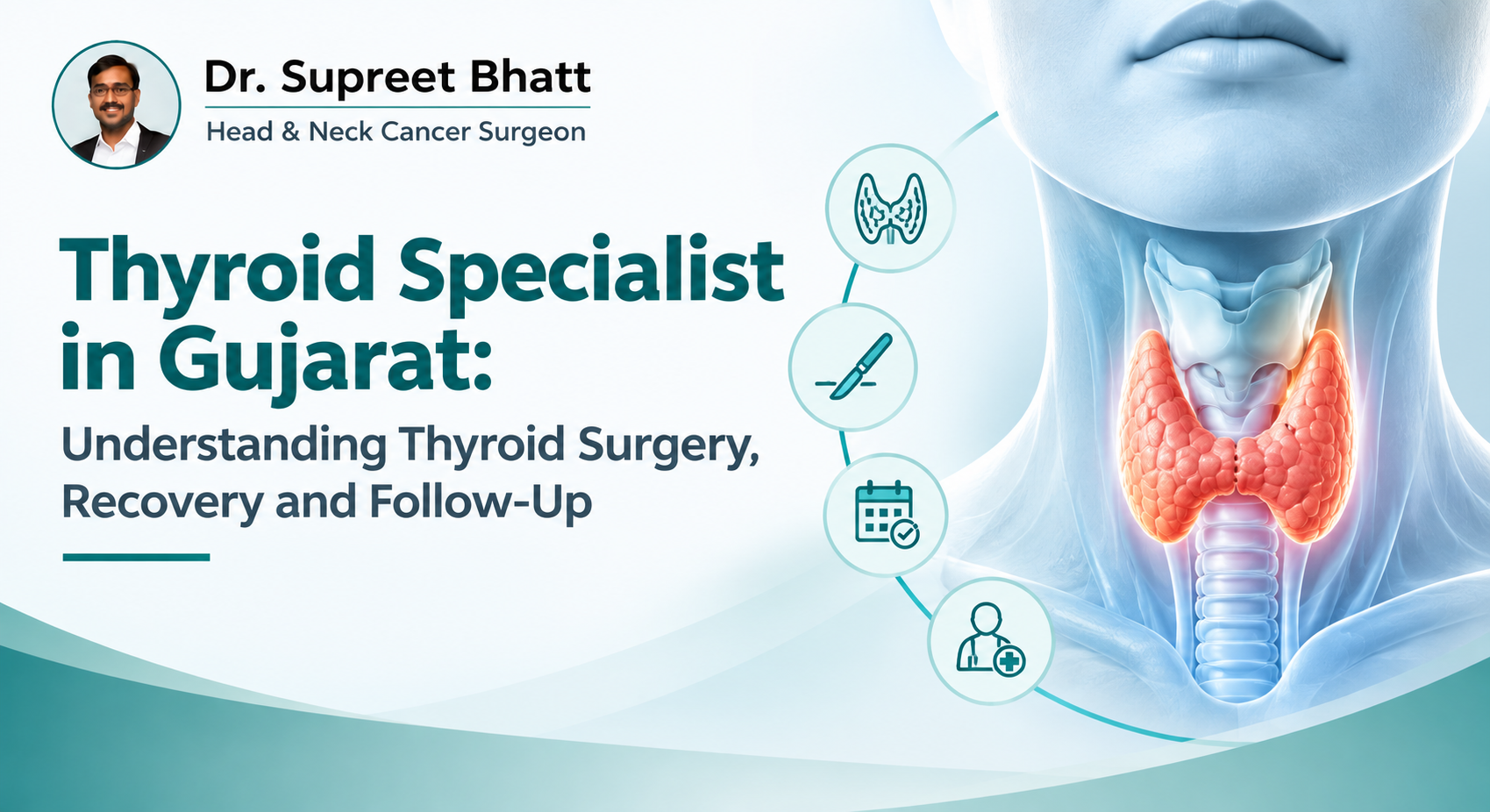
If your doctor has just mentioned the words "thyroid surgery," chances are your mind is racing with questions. Is this actually necessary? What does the operation involve? How long before you feel like yourself again? That mix of worry and confusion is completely normal, and it's exactly why so many patients start their journey by searching for a trusted thyroid specialist in Gujarat who can make sense of what's happening and guide them through it step by step.
Tucked at the base of your neck, the thyroid gland quietly controls a surprising amount of what happens in your body, your metabolism, your energy levels, even your heart rate. So when a nodule, cyst, or tumor shows up on a scan, it's natural to want answers fast, from someone who actually understands this field inside out. Dr. Supreet Bhatt, a Consultant Head & Neck Cancer Surgeon with focused expertise in thyroid conditions, brings exactly this kind of clarity to patients navigating a fresh diagnosis.
In this blog, we'll break down what thyroid surgery really involves, what recovery honestly looks like, and why the follow-up visits you might be tempted to skip are actually just as important as the operation itself.
Why Does the Thyroid Sometimes Need Surgery?
Your thyroid produces hormones that regulate a lot of everyday bodily functions. Most nodules that turn up on an ultrasound are completely harmless and just need to be watched over time. But some situations do call for surgery.
When Surgery Becomes Necessary
- A nodule or tumor that looks suspicious on ultrasound or comes back concerning on a biopsy
- Confirmed thyroid cancer, papillary, follicular, medullary, or the rarer anaplastic type
- A multinodular goiter that's grown large enough to be visible or uncomfortable
- Hyperthyroidism that medication just hasn't been able to control
- Physical symptoms like trouble swallowing, breathing difficulty, or a change in your voice caused by gland enlargement
Not every nodule automatically means an operation. Your doctor will usually order an ultrasound, some blood work, and often a fine needle aspiration cytology (FNAC), basically a small biopsy, before deciding whether to simply monitor it, treat it with medication, or recommend surgery.
What Happens During Thyroid Surgery
The medical term is thyroidectomy, and it means removing either part of the gland or all of it, depending on your specific diagnosis, the size of what needs to come out, and whether cancer is involved.
Types of Thyroid Surgery
Hemithyroidectomy (or Lobectomy): Only one side of the gland is removed. This is usually the approach when a nodule is limited to one lobe and the cancer risk is considered low. A lot of patients keep normal thyroid function afterward and never need hormone tablets.
Total Thyroidectomy: The whole gland comes out. This is generally the recommendation for larger tumors, confirmed cancer, or nodules affecting both sides. After this, you will need to take thyroid hormone medication every day for the rest of your life.
Neck Dissection (Central or Lateral): If cancer has already spread to nearby lymph nodes, the surgeon may need to clear those out too, alongside the main thyroidectomy, to make sure nothing is left behind.
What really separates a good outcome from a difficult one here is precision. There are two delicate structures sitting right next to the thyroid the recurrent laryngeal nerve, which controls your voice, and the parathyroid glands, which manage calcium in your body. Protecting both of these during surgery isn't optional it's central to how the operation should be done. It's this kind of careful, technique-driven approach that Dr. Supreet Bhatt brings to every thyroid case, backed by years of focused experience in head and neck oncologic surgery.
How Long Does Thyroid Surgery Take?
Typically anywhere from ninety minutes to three hours, depending on how much needs to be removed and whether lymph nodes are involved too. It's done under general anesthesia, and you'll be watched closely for the first several hours right after.
Life After Surgery: The Recovery Timeline
Here's some good news, recovery from thyroid surgery is usually a lot gentler than people expect going in. Still, knowing what to expect at each stage helps take the guesswork and some of the anxiety out of it.
The First Few Days
Most people spend one to two nights in the hospital. A sore neck, a slightly raspy voice, or some difficulty swallowing softer foods is common in the beginning, none of this is alarming, and it tends to settle within days. Pain is generally manageable with the tablets your doctor prescribes.
First Two Weeks
The incision itself is small, low on the neck, and heals discreetly. You'll need to keep it clean and dry, but beyond that, most patients are back to their normal light routines within a week. It's best to hold off on the gym or heavy lifting for two to three weeks while everything settles.
What About Your Voice and Swallowing?
Some patients notice a temporary change in their voice, this happens because of swelling near the nerves close to the vocal cords, and it usually improves within a few weeks on its own. Long-term voice changes are rare when the surgery is performed carefully with proper nerve preservation.
Calcium Levels After Total Thyroidectomy
Because the parathyroid glands sit right next to the thyroid, some patients experience a temporary dip in calcium levels after a total thyroidectomy you might notice tingling in your fingertips or around your mouth. This is easily managed with calcium and vitamin D supplements and typically clears up within a few weeks.
The Importance of Follow-Up Care
Here's something worth remembering, the surgery is really just one chapter. What happens afterward, in terms of consistent follow-up, is what protects your health over the years to come.
What Follow-Up Usually Looks Like
- Thyroid function blood tests (TSH, T3, T4) to keep hormone levels balanced and fine-tune your medication
- Neck ultrasounds at regular intervals, especially important if cancer was involved, to catch any recurrence early
- Thyroglobulin testing for those treated for differentiated thyroid cancer, this marker helps flag any recurrence long before it becomes a bigger problem
- Calcium checks for anyone who had a total thyroidectomy
- Voice evaluation, if there were any changes noticed after the operation
Thyroid Hormone Replacement
If your entire thyroid was removed, you'll be on a daily levothyroxine tablet from here on, replacing the hormone your body can no longer make. Your dose gets adjusted based on periodic blood work, and once it's dialed in correctly, most people genuinely don't feel any different in their day-to-day lives.
Long-Term Monitoring for Thyroid Cancer Patients
For patients treated for thyroid cancer specifically, follow-up isn't a one-time thing, it often continues for several years, with the first five years being when doctors watch most closely for any recurrence. Depending on the type and spread of the cancer, some patients may also need radioactive iodine therapy after surgery as part of the broader treatment plan.
Why Choosing the Right Specialist Matters
Thyroid surgery sits in a bit of a unique space, part endocrine surgery, part oncology, especially when cancer is on the table. And because the thyroid sits so close to your voice nerves, your parathyroid glands, and some major blood vessels, your outcome really does depend heavily on how experienced and precise your surgeon is.
If you're looking for a dependable thyroid specialist in Gujarat, it's worth checking for someone with focused training in head and neck oncology, a solid history handling complex thyroid and parathyroid surgeries, and a clear plan for what follow-up looks like after the operation. Dr. Supreet Bhatt, a Consultant Head & Neck Cancer Surgeon who holds an M.Ch. degree in this exact field, brings that blend of surgical precision and patient-first care to everything from simple nodules to more advanced thyroid cancers.
Picking the right specialist isn't just about who holds the scalpel. It shapes your entire experience, from getting an accurate diagnosis in the first place, through a recovery that goes smoothly, all the way to the long-term monitoring that keeps you safe for years afterward.
Frequently Asked Questions
1. Is thyroid surgery painful?
Most people feel mild to moderate discomfort in the neck for a few days, and it's usually well-controlled with the pain medication your doctor prescribes. Severe pain isn't typical.
2. Will I be on medication forever after thyroid surgery?
Only if the whole gland is removed. If you just had part of it taken out (a lobectomy), you'll often keep normal thyroid function without needing daily medication.
3. How quickly can I get back to work?
If your job is mostly desk-based, expect to return within one to two weeks. Physically demanding jobs usually need three to four weeks of recovery time first.
4. Does thyroid surgery leave a noticeable scar?
Not really, the cut is small and placed along a natural crease in your neck, so it fades quite a bit over the following months and becomes hard to spot.
5. How do doctors catch a recurrence during follow-up?
Mainly through regular neck ultrasounds, thyroglobulin blood tests, and thyroid function checks, these together help spot anything unusual early, before it becomes a bigger issue.
Conclusion
Thyroid surgery can feel like a big deal when you're first told you need it, and in some ways, it is. But it's also a well-established, generally safe procedure in experienced hands. Understanding what the surgery actually involves, having realistic expectations for recovery, and staying committed to your follow-up appointments, these three things together are what really determine how well things go. If you're currently navigating a thyroid specialist in Gujarat diagnosis and looking for the right guidance, don't wait for symptoms to worsen, book a consultation today and take the first confident step toward a smoother recovery and lasting peace of mind.

About the Author
Dr. Supreet BhattHead and Neck Cancer Surgeon and Thyroid Surgeon, Senior Consulatent Zydus Cancer Center
View all articles →