
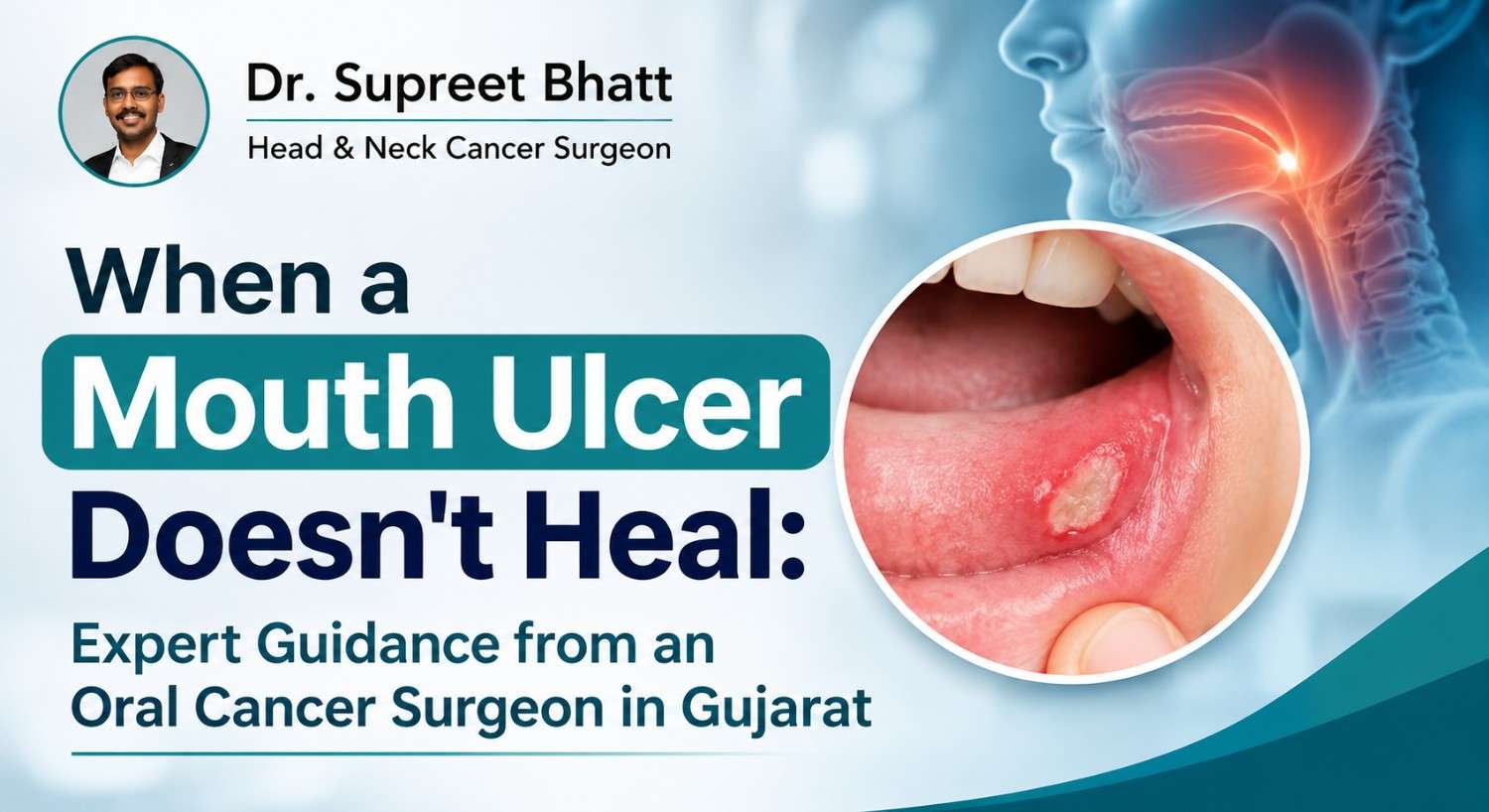
Most of us have bitten our cheek while eating and ended up with a sore spot for a few days. Mouth ulcers are that common. They show up, they hurt, and within a week or two they're gone.
The ones worth worrying about are the sores that stay. Maybe it's been three weeks and it still hasn't closed up. Maybe it keeps coming back in exactly the same place, or it looks different than it did last week. Those are the ulcers people tend to put off, and that delay is what this article is about.
Dr. Supreet Bhatt works with head and neck cancers, including oral cancer, and many patients arrive wondering whether a small sore in the mouth is something to fuss over. Telling an ordinary ulcer from a worrying one is not always easy at home, so it helps to know what to look for.
An Oral Cancer Surgeon in Gujarat can examine the sore, order the right tests, and work out what's behind it. A long-lasting ulcer isn't always cancer, but knowing the warning signs helps you decide when it's time to get it checked.
What Is a Normal Mouth Ulcer, and When Should You Be Concerned?
A regular ulcer is a small, painful sore on the tongue, the inside of the cheeks, the gums, the lips, or the floor of the mouth. You'll often see a white or yellowish centre with a red ring around it. Most of them heal in 7 to 14 days.
The usual causes are everyday things. A bitten cheek, a sharp tooth, a dental appliance that rubs, or a burn from a cup of tea that was too hot. Stress and poor sleep can bring them on, and so can low iron, vitamin B12, or folate. Some infections and inflammatory conditions also cause ulcers.
Signs That an Ulcer Needs Medical Attention
Don't wait it out if the ulcer:
- hasn't healed after two weeks
- is slowly getting bigger
- feels hard, or has raised edges
- bleeds without any obvious reason
- keeps coming back in the same spot
- causes steady pain, numbness, or discomfort
- appears along with a lump in the neck or trouble swallowing
None of this means you definitely have cancer. But how long the sore has lasted, how it looks, where it sits, and what else is going on all help a specialist decide whether to dig deeper.
Why a Non-Healing Mouth Ulcer Should Not Be Ignored
The lining of the mouth is delicate, and small injuries are normal. That's exactly why people stop paying attention to sores there. Yet some lesions that refuse to heal can be linked to precancerous changes or to oral cancer.
Oral cancer can begin on the sides or underside of the tongue, the inner cheeks, the gums, the floor of the mouth, the lips, or the roof of the mouth.
One thing catches people off guard, early oral cancer often isn't very painful. Because it doesn't hurt much, many people assume it will go away and carry on as usual. If a sore keeps growing, changes in appearance, or stays even after you've dealt with the thing that may have caused it, it should be seen by a qualified specialist. Looking early gives you a better chance of getting a clear diagnosis and the right treatment before things move further.
Warning Signs of Oral Cancer You Should Recognise
A sore that won't heal is only one clue. Sometimes the first signs are a change in the mouth, tongue, jaw, or neck, long before real discomfort begins.
Patches that don't go away. A white patch that can't be wiped off may be leukoplakia, and a red one may be erythroplakia. Some contain precancerous cells. You can't judge by sight, so a doctor needs to examine them, and a biopsy is sometimes needed.
Bleeding with no cause. If an ulcer, your gums, or some abnormal tissue bleeds without an injury, and it keeps happening, get it looked at.
Trouble with chewing or swallowing. Pain when you chew, or a feeling that food is catching, can mean a growth is affecting the tissues you use to eat.
A mouth that won't open as wide. If this is slowly getting worse, something is going on. Tobacco and areca nut can cause oral submucous fibrosis, which makes the tissues stiff and limits how far you can open.
A lump in the neck. It might be an enlarged lymph node. Plenty of things cause those, but a lump that stays or keeps growing needs an exam.
Numbness or lingering pain. Numbness in the tongue, lips, or mouth, a sore jaw that doesn't settle, or pain that travels toward the ear can sometimes point to a problem in the mouth or the head and neck area.
On their own, none of these says "cancer." When they hang around, though, they deserve a proper look.
Who Is at Higher Risk of Developing Oral Cancer?
Anyone can develop it, but some habits clearly raise the risk.
Tobacco is the biggest one. That includes cigarettes and beedis, as well as chewing tobacco, gutka, and other smokeless products. Over time, the repeated exposure damages the cells that line the mouth. Areca nut and supari carry their own risk, and they can also lead to oral submucous fibrosis. Alcohol adds to the risk too, and when someone uses both alcohol and tobacco the risk climbs higher than with either alone.
Constant irritation matters as well. A sharp tooth or a denture that fits badly can keep injuring the same area, so these should be corrected. That said, everyday mouth injuries don't automatically turn into cancer. People who have had leukoplakia, erythroplakia, oral submucous fibrosis, or similar conditions may need regular follow-up.
Keep in mind that risk factors only raise the odds. Having none of them doesn't make oral cancer impossible.
How Is a Persistent Mouth Ulcer Diagnosed?
Several conditions can look a lot like oral cancer, which is why a careful diagnosis matters. The specialist considers how the ulcer looks, how long it's been there, where it is, any other symptoms, and your risk factors, and only then decides which tests make sense.
It starts with a conversation. The doctor may ask how long the ulcer has been there, whether it has changed, whether it bleeds or hurts, and whether you've had similar ones before. They'll also ask about tobacco, gutka, supari, or alcohol, and what medicines or treatments you've already tried.
Then comes the examination. The doctor checks your tongue, gums, inner cheeks, lips, floor of the mouth, and palate. The edges of the ulcer, its texture, how firm it is, and the tissue around it all give useful information. The neck is checked for swollen lymph nodes or lumps, and depending on your symptoms the throat or other head and neck areas may be examined too.
A biopsy may follow. When an ulcer looks suspicious or doesn't heal the way it should, a biopsy is one of the most important tests. A small piece of the abnormal tissue is taken, and a pathologist looks at it under a microscope to see whether it is benign, precancerous, or cancerous. Being asked to have a biopsy does not mean cancer has been found. It's the way to find out what the sore actually is.
Imaging, if needed. If oral cancer is confirmed or strongly suspected, scans help show how far it has spread. A CT scan looks at the tumour and the structures around it, an MRI shows soft tissues and whether nearby areas are involved, and PET-CT is used in selected cases to check for spread. Other tests may be added for lymph nodes. What you need depends on what the doctor finds.
Why Early Consultation With an Oral Cancer Specialist Matters
When a mouth sore stays unexplained, a specialist opinion can save you from losing weeks or months. A head and neck oncology specialist sees suspicious oral lesions regularly and can tell which ones need only watching, which need medication, and which need a biopsy or surgery.
An Oral Cancer Surgeon in Gujarat can assess lasting oral problems, suggest the right investigations, and guide you through what comes next if something serious is found. At Dr. Supreet Bhatt, oral cancer care is part of specialised head and neck cancer services. The focus is on reaching an accurate diagnosis, understanding how far the disease has progressed, and planning treatment around the individual patient.
It's best not to rely only on home remedies, or to keep swapping one medicine for another, when a sore won't heal. An examination in person tells you far more than guessing from a photo or a list of symptoms.
Treatment Options
What treatment looks like depends on the cause. An ulcer from a minor injury, a vitamin deficiency, an infection, a precancerous lesion, and an oral cancer are all handled differently.
For ordinary ulcers caused by trauma or irritation, treatment usually means removing the cause, keeping the mouth clean, and using suitable medication for comfort. If a deficiency is involved, supplements may help after proper evaluation. Infections and inflammatory conditions need treatment for the specific problem. And if a sharp tooth or a badly fitting appliance is to blame, fixing it often lets the tissue heal on its own.
Precancerous patches may be monitored, biopsied, removed, or treated in other ways, depending on how they look and what the lab report shows. Follow-up visits matter here, because some lesions change over time. Do stick to the check-up schedule your specialist gives you.
For confirmed oral cancer, the plan depends on where the tumour is, its size and stage, its tissue characteristics, and your general health. Treatment can include:
- surgery to remove the tumour
- neck dissection, when the lymph nodes need to be treated
- reconstructive surgery to restore tissue and function
- radiation therapy
- chemotherapy or other systemic treatment in selected cases
- a combination of these when required
Surgery may be recommended when the tumour can be removed safely and the disease dealt with properly. Reconstruction can help with speech, swallowing, appearance, and how the mouth functions afterwards. No two patients are treated in exactly the same way.
What Can You Do to Protect Your Oral Health?
Giving up tobacco in every form is among the most effective steps you can take. Avoid areca nuts and gutka too. If you use them now, professional support can make quitting easier.
Brush regularly, clean between your teeth, and see a dentist for routine check-ups. If a sharp tooth, a broken filling, or a loose denture keeps irritating your mouth, get it fixed.
Take a minute now and then to look inside your own mouth with a mirror and good light. You're looking for new patches, sores, swelling, or changes on the tongue and inner cheeks. It's no replacement for a professional exam, but it can help you notice changes sooner.
And if a sore, patch, lump, or any odd symptom sticks around for more than two weeks, book an examination. Don't wait for it to start hurting.
When Should You Consult an Oral Cancer Surgeon in Gujarat?
Think about seeing a specialist if you have a mouth ulcer that isn't healing, bleeding with no reason, red or white patches that remain, difficulty swallowing, reduced mouth opening, or a lump in the neck. It matters even more if you use tobacco, gutka, or areca nut and have noticed something new in your mouth.
Going early doesn't mean you're expecting bad news. It simply means finding out the cause sooner and choosing the right next step based on real findings.
Frequently Asked Questions (FAQs)
1. How long does a normal mouth ulcer take to heal?
Usually 7 to 14 days. If it lasts longer than two weeks, gets bigger, or looks unusual, have a doctor examine it.
2. Can a painless mouth ulcer be a sign of oral cancer?
Yes. Early oral cancer can cause little or no pain, so a painless ulcer, lump, or patch that stays should not be ignored.
3. Does every non-healing mouth ulcer mean cancer?
No. Trauma, infections, nutritional deficiencies, and inflammatory conditions can all cause long-lasting ulcers. An examination and, when needed, a biopsy will show the actual cause.
4. When should I consult an Oral Cancer Surgeon in Gujarat?
If an ulcer lasts more than two weeks, keeps returning in the same place, bleeds unexpectedly, feels firm, or comes with trouble swallowing, limited mouth opening, or a neck lump.
5. Is a biopsy necessary for every persistent mouth ulcer?
Not always. The specialist looks at how the ulcer appears, how long it has been there, where it is, and your other symptoms. A biopsy is advised when the lesion looks suspicious or needs confirmation.
Conclusion
Most mouth ulcers are short-lived and heal without any trouble. One that lasts beyond two weeks, changes its look, bleeds, or comes with other unusual symptoms needs professional attention.
Early evaluation helps separate a harmless sore from something serious. An accurate diagnosis, the right tests, and timely treatment all protect your oral health and improve outcomes when cancer is found.
If you have a persistent mouth ulcer, unexplained patches in your mouth, or any of the warning signs above, consult Dr. Supreet Bhatt for expert evaluation and guidance on oral cancer diagnosis and treatment.
Don't let a persistent mouth ulcer go unchecked. Schedule a consultation with an experienced oral cancer specialist to understand your symptoms and take the next step towards timely care.

About the Author
Dr. Supreet BhattHead and Neck Cancer Surgeon and Thyroid Surgeon, Senior Consulatent Zydus Cancer Center
View all articles →